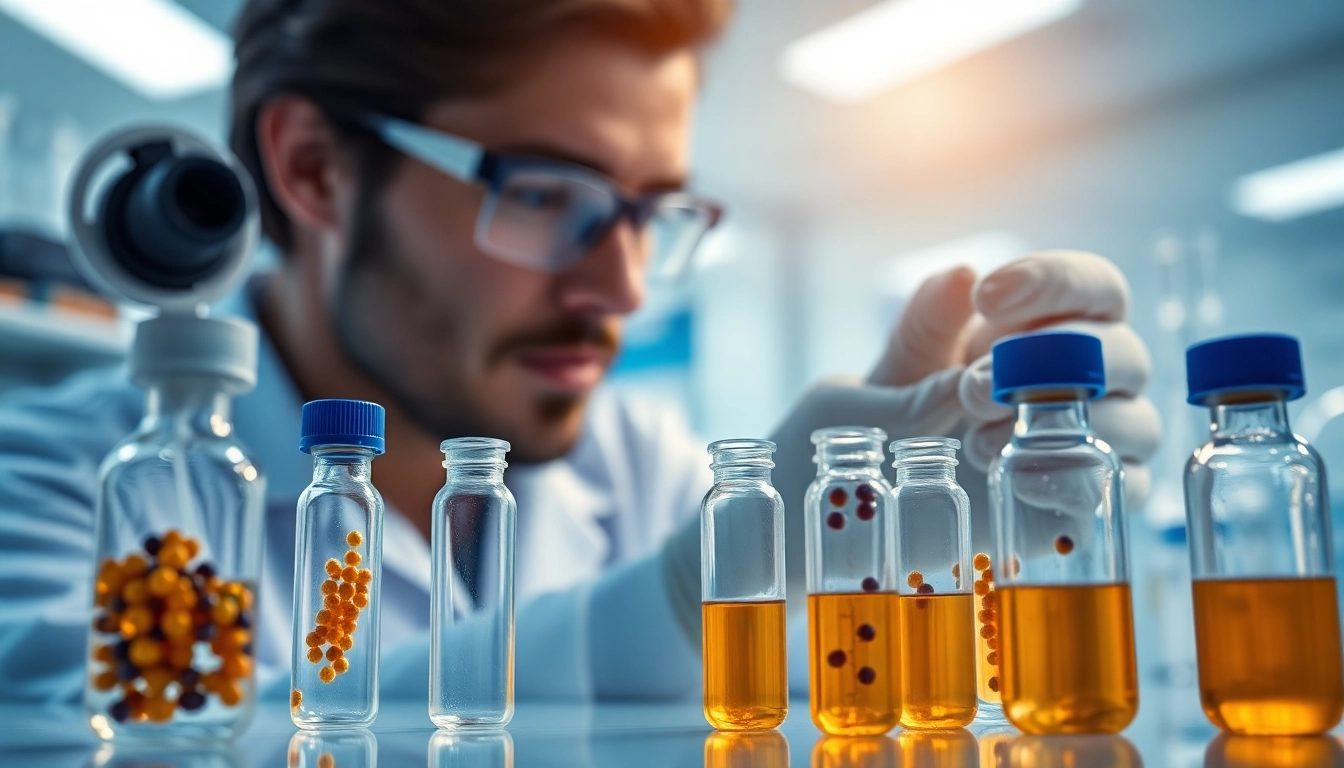
Understanding Peptides and Their Importance
Peptides are short chains of amino acids linked by peptide bonds and play a critical role in numerous biological processes. Their unique structure allows them to perform a variety of functions, ranging from regulating metabolism to acting as hormones. The study of these fascinating molecules has led to significant advancements in various fields, particularly in medicine. As researchers delve deeper into peptide research, the potential for innovative treatments and therapies seems limitless.
What Are Peptides?
Peptides typically consist of 2 to 50 amino acids, which are the building blocks of proteins. Depending on their sequence and number of amino acids, peptides can exhibit a wide range of biological activities. They can be classified into several categories, including:
- Hormonal Peptides: These are involved in signaling pathways that regulate various physiological processes.
- Neuropeptides: These peptides act as neurotransmitters in the nervous system.
- Antimicrobial Peptides: Found in various organisms, they play a role in the immune response.
- Peptide Hormones: Includes insulin and glucagon, which regulate metabolism.
The precise arrangement of amino acids in a peptide determines its properties and potential applications in research and therapeutic contexts.
The Role of Peptides in Biological Processes
Peptides are essential for numerous biological functions. They facilitate communication between cells, modulate immune responses, and contribute to the structural integrity of various tissues. Additionally, peptides can also act as enzymes or enzyme inhibitors, further highlighting their versatility in biological systems. Their ability to interact with specific receptors allows them to trigger significant biological responses, making them invaluable in research settings.
Applications of Peptide Research
Peptide research has broad implications in several areas:
- Drug Development: Many pharmaceutical companies are exploring peptides as potential therapeutic agents due to their specificity and reduced toxicity.
- Vaccine Development: Peptides are used in designing vaccines that elicit a strong immune response without introducing live pathogens.
- Diagnostic Tools: Peptides serve as biomarkers for various diseases, facilitating early diagnosis and treatment.
- Biotechnology: Peptides are utilized in various biotechnological applications, including biosensors and bioremediation.
The versatility of peptides has led to an increased focus on their potential in research and clinical settings, providing a robust area for ongoing studies.
Key Techniques in Peptide Research
Synthesis of Peptides
The synthesis of peptides is a cornerstone of peptide research. Two widely used methods are solid-phase peptide synthesis (SPPS) and liquid-phase peptide synthesis (LPPS). SPPS allows for the rapid assembly of peptides by attaching them to a solid support and is favored for its efficiency and scalability. LPPS, while more traditional, is often used for smaller peptides due to its simpler reaction environment. Optimizing conditions for peptide synthesis can significantly influence the yield and purity of the final product.
Characterization Methods
Characterizing peptides is critical for understanding their structure and function. Key techniques include:
- Mass Spectrometry: This method determines the mass of a peptide and helps identify its amino acid sequence.
- Nuclear Magnetic Resonance (NMR) Spectroscopy: NMR provides insights into the three-dimensional structure of peptides in solution.
- Chromatography: Techniques like HPLC and FPLC are essential for purifying peptides to ascertain their properties.
Each technique has its strengths and limitations, often requiring complementary methods for comprehensive characterization.
Analytical Techniques for Peptide Research
Analytical techniques form the backbone of peptide study, assessing various properties such as stability, potency, and interactions. These can include biochemical assays to evaluate peptide activity in biological systems and high-resolution techniques for studying conformational dynamics. Understanding these aspects is crucial for translating basic research into practical applications.
Challenges in Peptide Research
Stability and Storage Issues
One of the primary challenges in peptide research is ensuring stability. Peptides can be prone to degradation via hydrolysis or oxidation, which affects their efficacy. Developing effective storage solutions, such as lyophilization or the use of stabilizing agents, is critical in maintaining peptide integrity during transportation and storage.
Specificity and Binding Challenges
Achieving specificity in peptide function is another significant challenge. Peptides must precisely interact with their targets without eliciting off-target effects. This requires careful design and validation through extensive testing, often necessitating iterative refinement of peptide sequences to enhance binding affinity while maintaining biological activity.
Ethical Considerations in Research
As with many research areas, ethical considerations play a crucial role in peptide research. This includes sourcing materials responsibly, ensuring research integrity, and considering the implications of peptide-based therapies. Researchers are called to uphold ethical standards that respect both scientific inquiry and societal values, particularly concerning human trials.
Future Trends in Peptide Research
Innovations in Drug Development
The landscape of drug development is undergoing a transformation, with peptides at the forefront. Innovative strategies, including peptide libraries and high-throughput screening, facilitate the discovery of novel peptides with therapeutic potential. These strategies enable researchers to rapidly evaluate vast libraries of peptides, increasing the chances of finding effective drug candidates.
Peptides in Personalized Medicine
Personalized medicine aims to tailor medical treatment to individual characteristics. Peptides, with their specificity, are perfectly positioned to fit into this model. Continued studies into peptide biomarkers can lead to personalized therapies based on one's unique genetic and molecular profile, optimizing treatment efficacy.
Emerging Technologies in Peptide Analysis
Emerging technologies, such as CRISPR-based tools and artificial intelligence (AI), are propelling peptide research into new realms. AI can aid in predicting peptide interactions and optimizing synthesis through advanced modeling, while CRISPR technologies open avenues for peptide applications in gene editing, enhancing therapeutic possibilities.
FAQs about Peptide Research
What are the main types of peptides used in research?
The main types of peptides include hormone peptides, neuropeptides, antimicrobial peptides, and peptide hormones, each serving distinct roles in biological processes and therapeutic applications.
How do peptides influence drug design?
Peptides influence drug design by providing specific interactions with biological targets, reducing off-target effects, and allowing for tailored therapies with potentially fewer side effects compared to traditional drugs.
What are the common methods for peptide synthesis?
Common methods for peptide synthesis include solid-phase peptide synthesis (SPPS) and liquid-phase peptide synthesis (LPPS), each with its unique advantages depending on the peptide’s properties and the scale of production.
Why is peptide stability important in research?
Peptide stability is crucial in research because unstable peptides can degrade, affecting their biological activity and reliability in experiments, ultimately influencing therapeutic outcomes.
What ethical considerations exist in peptide research?
Ethical considerations in peptide research encompass scientific integrity, responsible sourcing of materials, and the implications of peptide therapies, particularly in human trials and their societal impact.